
Ask rediffGURU and PF expert Nitin Narkhede your mutual fund and personal finance-related questions.

'Investors' decisions should reflect their financial goals, risk tolerance, and the amount of gold already present in their portfolio.'

With the RBI infusing Rs 7.5 lakh crore in liquidity -- and possibly more in the future -- the short- to medium-term corporate bond market is expected to benefit.

When the market is down, you can buy more units, which offers you the rupee cost averaging. But the question here is, with so many options available in the market, which one should you choose? Keep reading to get the answer.
The Reserve Bank of India (RBI) has announced a dollar-rupee two-year sell-buy swap auction for $5 billion on March 8, which will suck out rupee liquidity from the system. The swap will be in the nature of a simple sell/buy foreign exchange from the RBI side, in which a bank will buy US dollars from the central bank and simultaneously agree to sell the same amount of US dollars at the end of the swap period. "With a view to elongating the maturity profile of its forward book and smoothen the receivables relating to forward assets, it has been decided to undertake sell/buy swap auction of $5 billion on March 8, 2022," the RBI said in a statement. The auction cut-off will be based on the premium amount in paisa terms up to two decimal points.

In the Indian stock market, investors are interested in the actions of both domestic and foreign institutional investors (FIIs and DIIs). These groups have wealth as well as expertise in research, which makes them powerful participants in the Indian stock market. Their buy and sell positions have a large effect on stock prices and market sentiment due to the large volume.

Public sector banks (PSBs) have delivered significant outperformance over the past three years and the sector has been re-rated. Given the growth and profitability expectations of an 18 per cent return on equity (RoE) over FY24-26, there is still a case for buying at the current levels. While the net interest margins or NIMs may remain range-bound or have a downward bias, there's optimism about possibly better opex ratios and lower non-performing assets (NPAs), plus scope for further credit cost reduction, and healthy treasury performances as interest rates trend down.

'Banks make money because they take the right credit calls. So they need to focus on risk mitigation rather than risk avoidance.'

India Ratings on Thursday said that any broad-based or strong recovery in corporate capital expenditure was unlikely in the upcoming financial year 2026 (FY26) due to uncertainty of domestic and external demand. The uncertainty is adversely affecting the overall corporate sector capex. Interest rates on credit are not the primary deterrent to decisions about capital expenditure, said Soumyajit Niyogi, director, core analytical group, Ind-Ra, in a webinar on the credit market outlook.

India is well-positioned to deal with the negative effects of US tariffs and global trade disruptions as domestic growth drivers and low dependence on exports anchor the economy, Moody's Ratings said on Wednesday.

Reserve Bank of India (RBI) Deputy Governor Swaminathan J criticised some non-banking financial companies (NBFCs) for lax loan appraisal practices and charging excessive interest rates, even as he acknowledged the sector's rapid expansion over the past decade, especially in recent years. "Unfortunately, some NBFCs seem to believe they can operate with weak underwriting in the pursuit of fast growth while levying excessive and unsustainable interest rates - sometimes disguised as upfront or processing fees - followed by aggressive recovery methods in case of default," Swaminathan said at the conference of NBFCs in Chennai last month.

Finance Minister Nirmala Sitharaman on Monday said action will be taken in case there are violations of well laid down processes for auctioning of gold by banks and NBFCs when a borrower fails to pay the gold loan. During Question Hour in Lok Sabha, she said Non Banking Financial Companies (NBFCs) and Scheduled Commercial Banks (SCBs) are guided by similar rules.

Banks are preferring instruments with higher premium over government securities for their held-till-maturity (HTM) portfolio, following the new investment norms, which came into effect from April 1. They are stocking up on corporate bonds and state government securities to boost yield on their portfolio, according to market participants. "Definitely, if there is a good spread available and without lower credit risk, those instruments will be favoured to boost the yield on the portfolio.
HDFC Bank's January-March quarter result, which came in-line with expectations, failed to enthuse investors. The reason? The management's decision to abstain from providing any specific growth guidance, and analysts' expectations of an arduous road to recovery. Analysts believe the path to normalisation of several growth metrics is unlikely to be a straightforward one, and the road to balance sheet realignment may be long.

Ask rediffGURU Reetika Sharma your insurance mutual fund and personal finance-related questions.

'Entering India is exciting, but it's also challenging. You have to be prepared for long-term investment.'

In a bid to support revival of sectors hit most by the Covid-19 pandemic, Reserve Bank of India on Friday decided to open a separate liquidity window of Rs 15,000 crore for certain contact-intensive sectors like hotels and restaurants, tourism and aviation ancillary services.

>It's not easy to predict the market. But there are at least two positive factors to back the PSU banks, explains Tamal Bandyopadhyay.

If they are made accountable, bad loan cases will shrink dramatically, recoveries will rise, and the NCLT process will be more manageable, asserts Debashis Basu.

RBI's exercise will take into account standards of governance, the viability of the payment bank (PB) business model, and changes, if any, if needed.

India's largest PSU bank, State Bank of India, delivered excellent results, once the impact of a big jump in employee expenses was adjusted for. The net interest income (NII) beat the Street due to a better net interest margin (NIM) and good loan growth. The credit growth at 5.2 per cent quarter-on-quarter (Q-o-Q) (15 per cent year on year) was excellent for a large bank.
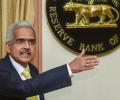
In a statement, the central bank said heightened volatility in capital markets in reaction to Covid-19 has imposed liquidity strains on mutual funds (MFs), which have intensified in the wake of redemption pressures related to closure of some debt MFs and potential contagious effects therefrom.
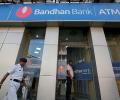
It is 10 years since Bandhan Financial Services became the first microfinance institution (MFI) to receive the universal bank licence. A year later, in 2015, it started operations. Bandhan's entry into banking was seen as a vote of confidence by the Reserve Bank of India (RBI) for the country's microfinance sector. Subsequently, the RBI awarded small finance bank licences to nine MFIs.

'I believe that the overall demand for commercial vehicles will improve, even though there is a slowdown in the GDP.'

'The central bank has highlighted that the slowdown in growth has been limited to a few sectors and overall growth is expected to pick up in the second half of the year.'
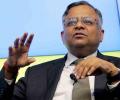
Tata Sons Ltd, the holding company of the $150 billion Tata group, may be forced to infuse fresh capital into its loss-making telecom arm, Tata Teleservices Ltd (TTSL). This is because TTSL has to pay Rs 19,256 crore adjusted gross revenue (AGR) along with other dues to the central government by March 2026.

In the sharpest jump in over two years, the country's foreign exchange reserves increased by $15.27 billion to $653.97 billion during the week ended March 7, the RBI has said. The overall reserves had dropped by $1.78 billion to $638.7 billion in the previous week.

With short-term rates firming up due to tight liquidity conditions, Indian corporates are opting to borrow long term to take advantage of the attractive rates by locking them in these uncertain times. The banking system has a liquidity deficit of over Rs 2 trillion. According to market participants, engineering conglomerate Larsen & Toubro (L&T) raised Rs 1,500 crore through 10-year bonds in December 2024.

Equity benchmark indices Sensex and Nifty ended lower on Friday, dragged by auto stocks and relentless foreign fund outflows. Weak US markets and tariff threats also dented investor sentiment. The 30-share BSE benchmark Sensex dropped 424.90 points or 0.56 per cent to settle at 75,311.06.

The recent run on the US-based Silicon Valley Bank (SVB) and the subsequent seizure of its assets by the regulators may have sparked a global wave of risk aversion, particularly for start-ups. However, the Indian banking sector is unlikely to be a victim of any contagion effects, said analysts. he bank, which played a big role in financing start-ups and technology players, faced stress after incurring huge losses on its holdings of US bonds, following the most-aggressive monetary tightening cycle by the Federal Reserve in around four decades.

Analysts expect Nifty to rise up by to 6 per cent in six months, with intermittent corrections likely due to global factors.

In response to the panic triggered by Trump's trade policies, the RBI net sold approximately $43 billion in the second half of FY25 to curb volatility, as the rupee plunged to a low of 87.95 per dollar in February this year.

P K Mishra, a retired IAS officer of the Gujarat cadre, is currently serving as the principal secretary to the prime minister.
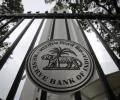
An NBFC must actively manage its collateral positions, differentiating between encumbered and unencumbered assets, and monitor such assets so that they can be mobilised in a timely manner, central bank says in circular.

An autonomous hydraulic-powered robot equipped with special machinery has been deployed to accelerate the search operation for seven people trapped inside a partially collapsed tunnel in Nagarkurnool, Telangana. The robot, equipped with a 30 HP capacity liquid ring vacuum pump and a vacuum tank machine, can remove up to 620 cubic meters of soil per hour using a conveyor belt. This technology aims to expedite the rescue efforts and enhance the efficiency of the operation. State Special Chief Secretary (Disaster Management) Arvind Kumar is supervising the search operation, which involves teams from the Army, NDRF, SDRF, HRDD, Singareni Collieries, a Hyderabad-based robotics company, and others.

'They have since only tried to improve systems. Also, with regulatory guidance from time to time, we are in a position to assess a situation and react in time.'
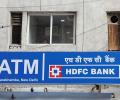
HDFC Bank's market capitalisation (market cap) touched Rs 13 trillion in Thursday's (December 28, 2023) intra-day trades as the largest private sector lender is set to report its sharpest monthly rally in the past two years. At 10:33 AM; HDFC Bank's market cap stood at Rs 13.03 trillion, the BSE data shows. The stock was up 1 per cent at Rs 1,717.90 in intra-day trades on December 29, inching towards its record high of Rs 1,757.80 touched on July 3, 2023.

Union Finance Minister Nirmala Sitharaman on Saturday announced a fresh Rs 15,000 crore 'SWAMIH Fund' for completion of 1 lakh units in stalled housing projects across various cities, a move aimed at providing relief to distressed homebuyers whose investments are stuck. In November 2019, the Centre announced a stress fund named 'Special Window for Affordable and Mid-Income Housing' (SWAMIH), to complete stalled housing projects across India.

Real estate investment trusts (Reits) are in talks with regulatory bodies - the Securities and Exchange Board of India (Sebi) and the Reserve Bank of India (RBI) - to seek changes in regulations that will allow easier access to capital. The Indian Reits Association (IRA) said it has approached the market regulator seeking to get classified as an 'equity' asset, which will open the path for their inclusion in equity indices and also make investment by mutual funds (MFs) easier. The association is also in active discussions with the RBI to allow banks to lend to a Reit.

From the Sensex pack, IndusInd Bank, NTPC, Asian Paints, Hindustan Unilever, JSW Steel, Tech Mahindra, Bajaj Finance, Infosys, Wipro, ICICI Bank, Bajaj Finserv, HDFC Bank and Tata Motors were among the major laggards. HCL Technologies, Power Grid, Titan, Reliance Industries, UltraTech Cement, Tata Steel, State Bank of India and Mahindra & Mahindra were the gainers.
